Showing posts with label India. Show all posts

The Original BITX 20 -- Designed at 35,000 Feet in 6 hours, Built in India in 3 Days


 I came across what appears to be an early version of Farhan's description of the design and initial construction of the BITX 20  (see below); this version has some interesting information on the origins of this important rig.  The picture below shows the designer himself working on that first BITX20.  It is from a CNN video.  I know Farhan is sick of seeing this old video, so I present here only the shot of the designer's hands at work on the original transceiver.
 

Some thoughts from the designer, Ashhar Farhan, VU2ESE: 

    This transceiver was designed during a six hour flight from Europe with paper, pencil and the basic calculator built into my cell phone. It was soldered in three sittings over three days. Very little went wrong during the construction. It was one of those easy designs. The only mistake that I made during construction was that I soldered one of transistors in reverse. The design worked as ‘advertised’. I guess that extensively using feed back amplifiers provides designers with greater repeatability. Also, I realized, a little late in life though, that detailed forethought and ‘mental’ home-brewing is important for a clean design.
    The linear chain was initially unstable. It tended to oscillate in the 14MHz band as well as around 500 KHz. I traced the 14MHz oscillations to a choke that I was using at the output of the balanced modulator. It has been removed. The 500 KHz oscillations were because of excessive gain in the driver and pre-driver stages. From 5 ohms, the emitter degeneration has been increased to 10 ohms and better bypassing on the power rail has eliminated the oscillations.The receiver is as hot as I need it to be on 20 meters. Signals from USA, Europe, South Africa and of course India were heard with clarity reminiscent of a clean Direct-conversion receiver on the first evening. The transmitter is powerful enough for local rag chew and it is a modest challenge for DX. VU2PEP has an excellent two element beam at 20 meters at about 40 feet height. DX is easy for OM Paddy who uses the rig regularly. We netted LA2FKA within the first 20 minutes of firing up the rig.
    No, I don't offer PCBs. I don't repair rigs. I don't offer kits. I might do a PCB for this rig (I hate PCBs, they hamper experimentation).
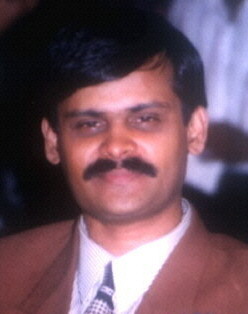
    This transceiver is dedicated to the memory of OM Juggie, SK (VU2JH) who was a great organizer of India hams, he wrote technical articles in Electronics For You magazine about amateur radio, spurring many to take on ham radio as a hobby. He organized the Millennium Ham Meet in the year 2000. He was always searching for a good and simple homebrew SSB transceiver. He died young. He gave me my first morse key.
Jagdish, VU2JH


Our book: "SolderSmoke -- Global Adventures in Wireless Electronics" http://soldersmoke.com/book.htmOur coffee mugs, T-Shirts, bumper stickers: http://www.cafepress.com/SolderSmokeOur Book Store: http://astore.amazon.com/contracross-20

World Radio Day! Article with Farhan


The Hindu did a nice article on World Radio Day.  They wisely featured someone with a true case of The Knack, someone with a strong emotional connection to radio and radios:  our friend Farhan.  

http://www.thehindu.com/features/metroplus/thank-you-for-the-radio/article6886601.ece


Our book: "SolderSmoke -- Global Adventures in Wireless Electronics" http://soldersmoke.com/book.htmOur coffee mugs, T-Shirts, bumper stickers: http://www.cafepress.com/SolderSmokeOur Book Store: http://astore.amazon.com/contracross-20

Beautiful Pictures of Mars from India's Spacecraft


Congratulations to the Indian Space Research Organization.  They put a spacecraft into Mars orbit on their first attempt, and they are getting back some spectacular images.  

I also like the banner on their web site: 


More info here: 

http://www.isro.org/pslv-c25/Imagegallery/mom-images.aspx

Our book: "SolderSmoke -- Global Adventures in Wireless Electronics" http://soldersmoke.com/book.htmOur coffee mugs, T-Shirts, bumper stickers: http://www.cafepress.com/SolderSmokeOur Book Store: http://astore.amazon.com/contracross-20

Confucian Wisdom from VU2BK in Hyderabad


I'm not a big collector of QSL cards, but this one has been kicking around in boxes and on various hamshack walls for more than 20 years.  I like the bit of Confucian wisdom that arrived in Santo Domingo all the way from Hyderabad.  I was running my trusty HT-37 and Drake 2-B.  Anyone know OM Kab, VU2BK?

Our book: "SolderSmoke -- Global Adventures in Wireless Electronics" http://soldersmoke.com/book.htmOur coffee mugs, T-Shirts, bumper stickers: http://www.cafepress.com/SolderSmokeOur Book Store: http://astore.amazon.com/contracross-20

Parts Cost for BITX in India: $5 US (that's buying all the parts!)


I knew that in India you could build a BITX for a few bucks, but I thought that this cost estimate assumed a fairly well-stocked junk box.   Not true!  This morning an e-mail from Farhan points out that even if an Indian ham has to BUY all the parts, he can get all of them for the equivalent of 5 dollars U.S.:

"Less than half a cent per resistor, less than a cent per capacitor, two cents per npn transistor and 50 cents for the IRF510. We use 'tv baluns' and tap washers for coils."

And, from the original BITX design page:

 "The purpose is to address the need among Indian hams in particular for an SSB rig that is easily and cheaply built. My original aim was to keep the price under Rs. 1000. The current design brings the cost to well under Rs.300 (less than 7 dollars)."

Now, when you are talking to someone using a new $10,000 Yaesu/Icom/Kenwood rig, it might be a bit unkind to mention that your rig can be had for $5. 


Our book: "SolderSmoke -- Global Adventures in Wireless Electronics" http://soldersmoke.com/book.htmOur coffee mugs, T-Shirts, bumper stickers: http://www.cafepress.com/SolderSmokeOur Book Store: http://astore.amazon.com/contracross-20

VU2JN's "Transistor Transmitter from India"


VU2JN


VU2INJ's very interesting blog led me to a wonderful 1967 QST article by VU2JN.  Check it out.  Necessity truly is the mother of invention and -- as is the case with our beloved BITX -- we see that in the design of this transmitter.  I love how the speaker was left in the cabinet and used as the microphone.  Check it out:

http://vu3inj.blogspot.in/2014/01/tribute-to-vu2jn.html

More on VU2JN (who very clearly merits "Homebrew Hero" status):

http://shipwreck1.hopto.org:8080/projects/hamprojects/VU2JNArchive/

Our book: "SolderSmoke -- Global Adventures in Wireless Electronics" http://soldersmoke.com/book.htmOur coffee mugs, T-Shirts, bumper stickers: http://www.cafepress.com/SolderSmokeOur Book Store: http://astore.amazon.com/contracross-20

Farhan's New Design: A General Coverage Transceiver: The Minima!


The homebrew phone QRP community has been waiting anxiously for the unveiling of Farhan's new design:  The Minima.  It is a general coverage transceiver with many innovative circuit features.  It has an Arduino in it and an Si570. Farhan's write up of the design process and the construction of the prototypes is really interesting.

http://www.phonestack.com/farhan/minima.html

I've built FOUR JBOTs and TWO BITXs.  I even built Farhan's Subway Sandwich Straw signal generator.   So even though I've been trying to keep my rigs all discrete,  I know I will build this one too. 

Three cheers for Ashhar Farhan!  Viva La Minima!

Our book: "SolderSmoke -- Global Adventures in Wireless Electronics" http://soldersmoke.com/book.htmOur coffee mugs, T-Shirts, bumper stickers: http://www.cafepress.com/SolderSmokeOur Book Store: http://astore.amazon.com/contracross-20

That wonderful first contact, when the new HB rig is still on the workbench...


In this video, YC0AFF in Indonesia seems to be having as much fun with his new BITX as I've been having with mine.  I think there is something special about those early contacts, when the newly finished (or not quite finished!) rig is still on the workbench.  Designed in India and built by radio amateurs all around the world, the BITX has become a global ham radio phenomenon, reminding us that we form an International Brotherhood of Electronic Wizards.

Our book: "SolderSmoke -- Global Adventures in Wireless Electronics" http://soldersmoke.com/book.htmOur coffee mugs, T-Shirts, bumper stickers: http://www.cafepress.com/SolderSmokeOur Book Store: http://astore.amazon.com/contracross-20

BITX Build: Update #2


Not much progress to report.  But I have been thinking about the filter frequency.  Here is my latest idea: 

Maybe I'll build the VFO in the 5 MHz range.  This would allow me to use the 9 MHz Yaesu filter (and associated crystals) that Steve Smith sent to me (see above).  With this I could be on 75 and 20 meters. 

I could build another filter at 13 MHz and, using the same VFO in the 5 Mhz range, get on our beloved 17 meter band.  I kind of like the idea of plug-in filters. 

You can see my ideas for the board layout.  I'm thinking of a Doug DeMaw Universal Hartley VFO inside the box shown above.   The tuning cap you see is out of an old Heath QF-1 Q Multiplier.  It has a very nice reduction drive built into the tuning shaft.  It measures 19 to 148 pf.     
Our book: "SolderSmoke -- Global Adventures in Wireless Electronics" http://soldersmoke.com/book.htmOur coffee mugs, T-Shirts, bumper stickers: http://www.cafepress.com/SolderSmokeOur Book Store: http://astore.amazon.com/contracross-20

Building the BITX! Update #1


There it is guys:  A blank canvas of copper-clad board.  A clean slate ready to be filled with the components for a BITX transceiver.  As you can see, I am fighting my "build first, design/plan later" tendencies.  No real design work for me on this one (thanks Farhan!) but I am trying to plan where everything will go on the board.  (Thanks to Jim, W8NSA for the board.)   I'm going to build it Manhattan style (perhaps with an ugly dead bug or two).  I'm starting with a big board because I always seemed to end up with a shortage of space.  It looks like I can easily get all of the circuit (minus the PA) on this board.  I'll build the PA on a separate piece of copper-clad.

I'd like to build it for 17 meters, but if I stick with the 10 MHz filter that means I have to build a VFO at around 8.1 MHz.  That's not impossible, but in my experience it is easier to build simple, stable VFOs at lower frequencies. 
 
I notice that there are a lot of cheap crystals available at higher frequencies.  So, instead of keeping the filter at 10 MHz and trying to get the VFO stable at 8.1, what do you guys think about keeping the VFO in the 4 MHz range and  building the filter with crystals in the 14 MHz range? 

Our book: "SolderSmoke -- Global Adventures in Wireless Electronics" http://soldersmoke.com/book.htmOur coffee mugs, T-Shirts, bumper stickers: http://www.cafepress.com/SolderSmokeOur Book Store: http://astore.amazon.com/contracross-20

Kishan Has the Knack! (video)


Many of us were staring out similar windows, also dreaming of model airplanes, and of transmitter circuits, and telescopes, and rockets... This video runs only 12 minutes.  Don't be deterred if you don't speak Hindi -- the story is easy to follow.

Our book: "SolderSmoke -- Global Adventures in Wireless Electronics" http://soldersmoke.com/book.htmOur coffee mugs, T-Shirts, bumper stickers: http://www.cafepress.com/SolderSmokeOur Book Store: http://astore.amazon.com/contracross-20

Feynman's Red Book (on the Sino-Indian Frontier)


Today I bought a copy of "Feynman's Tips on Physics."   I wasn't sure about buying it, but this story in Ralph Leighton's foreword convinced me:  

"At a lonely border post high on the Himalayan frontier, Ramaswamy Balasubramanian peered through his binoculars at the People's Liberation Army soldiers stationed in Tibet ― who were peering through their scopes back at him. Tensions between India and China had been high for several years since 1962, when the two countries traded shots across their disputed border. The PLA soldiers, knowing they were being watched, taunted Balasubramanian and his fellow Indian soldiers by shaking, defiantly, high in the air their pocket-sized, bright-red copies of Quotations from Chairman Mao ― better known in the West as "Mao's Little Red Book."

Balasubramanian, then a conscript studying physics in his spare time, soon grew tired of these taunts. So one day, he came to his observation post prepared with a suitable rejoinder. As soon as the PLA soldiers started waving Mao's Little Red Book in the air again, he and two fellow Indian soldiers picked up and held aloft the three, big, bright-red volumes of The Feynman Lectures on Physics.

One day I received a letter from Mr. Balasubramanian.  His was among the hundreds I have received through the years describing the lasting impact Richard Feynman has had on people's lives.  After describing the "red-books" incident on the Sino-Indian Frontier, he wrote, 'Now, twenty years later, whose red books are still being read?' "   


Our book: "SolderSmoke -- Global Adventures in Wireless Electronics" http://soldersmoke.com/book.htmOur coffee mugs, T-Shirts, bumper stickers: http://www.cafepress.com/SolderSmokeOur Book Store: http://astore.amazon.com/contracross-20

Ham Radio, the tsunami, HW-101, Tek 465, BITX-20


I know many of you guys have seen this before. And I know that Farhan is tired of seeing it pop up again and again.  But it just appeared on my Facebook page today and I watched the whole thing and saw things I hadn't noticed before:  There's a Heathkit HW-101 (or maybe its an HW-100).  There is a Tech 465 oscilloscope. There is a BTX-20!  

Our book: "SolderSmoke -- Global Adventures in Wireless Electronics" http://soldersmoke.com/book.htmOur coffee mugs, T-Shirts, bumper stickers: http://www.cafepress.com/SolderSmokeOur Book Store: http://astore.amazon.com/contracross-20

Peter Parker's Knobless Wonder Minimalist SSB Rig


Oh man, Peter Parker has done it again!   As he did with the Beach 40, he has come up with a circuit that will attract a lot of attention.  It is a single frequency SSB transceiver with no knobs (or windows, or menus!) 

Peter Marks recently had breakfast in Melbourne with VK3YE:
http://blog.marxy.org/2013/05/melbourne-meetup-with-homebrew-legend.html
There are some great pictures of the new rig, and the Beach 40.

Here's the message  from VK3YE (to the Minimalist Radio Group) that may
someday be seen as the start of the Knobless Revolution:

Some might reckon that SSB is inevitably too complex to be in the minimalist
class, but I beg to disagree.

I reckon you could build a whole SSB transceiver in 2 days of solid work. I
took a day to build what will be described below up to the stage where it

was receiving & producing a low level SSB on Tx.

Take this recipe:

1. Build the back end of the BitX
http://www.phonestack.com/farhan/bitx.html
That is everything to the right of (and including) the Q2 & Q12 stages.

2. Use cheaply available 7.159 MHz crystals in the crystal filter and
carrier oscillator. Keep filter capacitor values the same. Remove L3 in the
carrier oscillator circuit. Use a slightly bigger trimmer in the carrier
oscillator (say up to 50 pF) and wire in series with crystal. Align trimmer
so carrier freq is 7160 kHz.

3. Build a power amplifier stage / relay / LPF as per the Beach 40. Just
the last 2 stages (using BD139s) should be enough. Output maybe 2w.

The result is a 10 transistor / 1 IC SSB transceiver on 7160 kHz. It's
crystal controlled but at least during the day 2 watts to a good antenna
should be enough for people to hear and reply to your CQ calls up to 800 -
1000 km away. Of course you could go a bit more minimalist and remove the
LM386, substituting 1 transistor instead (as per the original Beach 40)
which is what I did.

The main thing that's odd is it has no knobs - no tuning, RIT, volume, RF
gain etc. Just sockets - for mic, phones, antenna and power to feed it what
it needs (Rx RF, Tx audio, DC power) and give what you want (Rx audio and Tx
RF).

It is philosophically different to using any other transceiver. You either
accept what the radio dishes up (frequency, AF gain, mic gain etc) or you
don't. On or off - there is no other state. Take it or leave it. Like a
cat this is a radio that lives on its own terms.

Those used to fiddling with adjustments will find the 'knobless wonder'
transceiver causes them to be at a loose end. Those so afflicted will smoke
more, bite their nails more or eat junk food more. Sometimes elegant
simplicity in radio can be a health hazard - maybe knobless rigs should
carry health warnings.

On the other hand, and in my view this outweighs the above, there is the
aesthetic satisfaction that comes from using a rig that cannot be made any
simpler. Especially if it's a mode, like SSB, that's widely thought
constructionally complex. Plus it takes little in return - the power
consumption will be a fraction of what a commercial rig will demand.

73, Peter VK3YE

Our book: "SolderSmoke -- Global Adventures in Wireless Electronics" http://soldersmoke.com/book.htmOur coffee mugs, T-Shirts, bumper stickers: http://www.cafepress.com/SolderSmokeOur Book Store: http://astore.amazon.com/contracross-20